
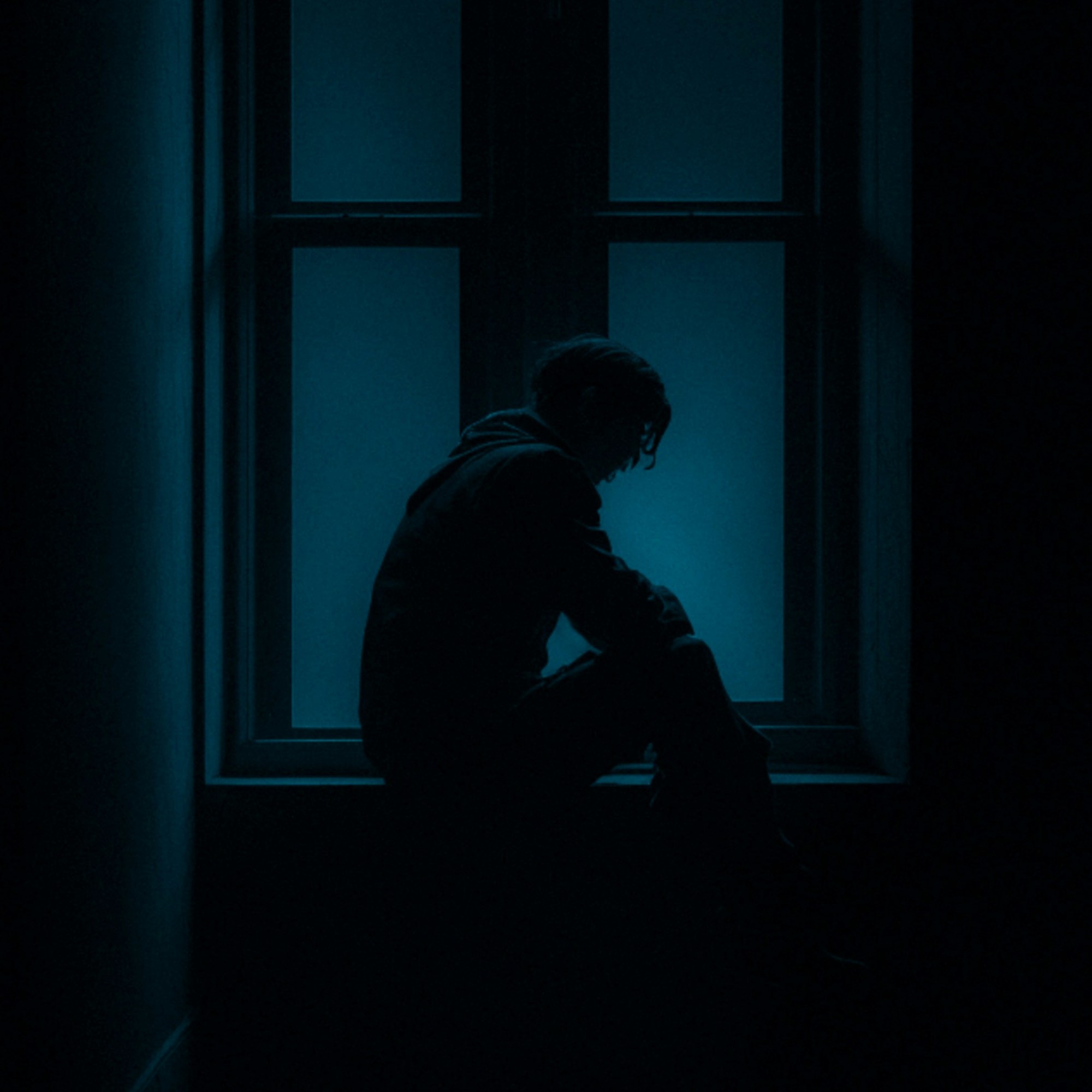
He never really grew up—not in the way that mattered, not where it counted in the soul. You see him in coffee shops sketching grand ideas in a notebook that never leave the page. You see him in relationships: passionate, intoxicating, all-consuming, until reality knocks and he’s gone. He chases meaning but runs from responsibility. He dreams of greatness but avoids the first small step. He’s not lazy, he’s not stupid—he’s stuck. Stuck in a myth he doesn’t even know he’s living out.
Carl Jung called him the Puer Aeternus, the eternal boy: an archetype buried in the male psyche. A boy trapped in a man’s body. A soul allergic to limitation, committed to potential, but terrified of becoming real. The Puer is not just a man who refuses to grow up; he is a man who fears death in every form—the death of freedom, the death of possibility, the death of being special.
So he floats. He keeps life in draft mode, never fully committing to anything, never grounding his energy into the world. Because to commit means to choose, and to choose means to kill off all other fantasies. And that, to the Puer, is unbearable. He lives in the realm of what could be, and the second he touches what is, he retreats.
But how does someone become this way?
Let’s go back to childhood.
The man-child usually begins as a boy who is either overprotected or emotionally neglected—and sometimes both. In overprotection, he is smothered with love but denied autonomy. He is praised but never challenged. His failures are cushioned, his discomforts removed. He never learns to face resistance because someone always steps in. So the world becomes terrifying—not because it’s cruel, but because it’s unfamiliar.
Then there’s the other version: the emotionally neglected boy.
He’s not told he’s special; he’s told nothing at all. Maybe his parents are emotionally absent, maybe there’s trauma, maybe he’s left to raise himself. So he retreats inward. He builds fantasy worlds; he becomes a dreamer. And those dreams become his shelter, the one place no one can hurt him.
In both cases, the boy never completes the rite of passage into manhood. He never learns to anchor his spirit in structure. He fears adulthood, not because he’s weak, but because adulthood to him means abandonment, failure, betrayal, or soul death.
So what does he do? He stays in motion. He chases excitement, lives in spontaneity, and avoids stability—not out of rebellion, but self-preservation.
The Paradox of the Incomplete
Here’s the paradox: the Puer Aeternus often appears charming, magnetic, and inspiring. He’s passionate, romantic, and emotionally expressive. He seems alive in ways other men aren’t, and that’s exactly why people fall for him. But the closer you get, the more confusing it becomes. One day he’s obsessed with you, the next he’s distant. One week he wants to start a business, the next he’s lost in video games.
You might even think, „He’s just scared, I can fix this, he just needs time.“ But time doesn’t grow him, because the wound isn’t on the clock—it’s in the soul.
Jung wrote, „The Puer Aeternus is the boy who cannot age, not because he’s youthful, but because he cannot face the responsibilities of life.“
The tragedy is that he’s not malicious. He’s not trying to hurt you; he simply hasn’t met himself yet. His entire life is built around protecting the inner child—the sensitive, fragile, brilliant part of him that was never nurtured properly. And so he builds a castle of dreams around that child. He guards it with ego. He escapes through women, art, drugs, philosophy, video games—anything but stillness. Because if he stops running, he might have to hear the cry he’s been avoiding his entire life.
That cry says: „Where were they when I needed them? Why didn’t anyone prepare me? Why does responsibility feel like death?“
Like Peter Pan, he finds his refuge in Neverland—a place where he’s never the problem, where life is an idea not a discipline, where love is romantic not relational, where passion burns but never warms.
Now, here’s the twist: the Puer Aeternus isn’t evil. He’s just incomplete. There’s brilliance in the Puer. He’s visionary, sensitive, and has access to archetypal imagination that most people lost long ago. But that brilliance without grounding becomes madness. It burns itself out. And that’s the shadow: the man who never finishes what he starts, the partner who never truly shows up, the father who plays but cannot protect, the artist who dreams but never creates.
The Healing
Carl Jung understood this tension deeply. He believed that every man must wrestle with this archetype. The goal is not to kill the boy; it’s to integrate him. To bring the imagination of the child into the responsibility of the adult to create wholeness, not perfection.
So what happens when the boy refuses to die, when the man avoids discomfort so long that comfort becomes his prison? Eventually, the fantasy collapses. Maybe he loses the job, maybe he loses the relationship, maybe he wakes up one morning and realizes he’s surrounded by half-finished dreams and broken promises.
That’s when the pain starts—not the external pain, but the inner ache of knowing that you’ve been running from your own life. This is the core wound of the Puer Aeternus. Life keeps happening without him, and sooner or later, he realizes something devastating: potential is no longer exciting, it’s shameful. He begins to feel haunted by what he could have been, what he should have done, and who he might have become if only he had chosen to stay.
This is the psychological cliff every man-child eventually approaches, and there are two paths from here:
- He doubles down. He blames the world. He becomes cynical, bitter, and sarcastic. He escapes deeper into distraction—chasing women, escaping into media, starting and abandoning new ideas—always spinning the story that one day it will all click.
- He stops running. He turns inward and asks the question he’s never dared to ask: „What am I so afraid of?“
This is where shadow work begins—not as a tool, but as a reckoning. Because to leave Neverland, you don’t just grow up; you grieve. You grieve the innocence that was stolen from you, the dreams that died in your avoidance, and the relationships that your fear sabotaged. You begin to meet the parts of yourself you’ve exiled: the part that longs to be seen, the part that’s terrified of failure, the part that doesn’t believe he can handle real life, the part that just wants to be held and told he’s enough.
Carl Jung believed that integration, not perfection, is the goal of healing. He wrote
„Until you make the unconscious conscious,
it will direct your life and you will call it fate.“
For the Puer Aeternus, the unconscious is a minefield of unmet needs and ungrieved losses. Until he goes back and reclaims them, he will keep unconsciously creating chaos, disappointment, and fantasy-driven avoidance.
The Boy must become a Man
The key is symbolic death. He must allow the boy inside him to die—not in spirit, but in dominance. He must choose grounding over glamour, process over perfection, devotion over escape. That’s the shift: the dreamer becomes the builder, the lover becomes the protector. The boy becomes a man—not by rejecting his dreams, but by daring to anchor them in reality. But this journey isn’t clean. It’s messy, dark, and terrifying. Because there’s a reason the boy refused to grow: growth for him was never safe. Responsibility felt like a trap; commitment felt like death.
So healing isn’t just about behavior; it’s about nervous system regulation, trauma recovery, and reparenting the parts of yourself that were never taught how to hold discomfort. This is why practices like Jungian shadow work, inner child work, and parts work are essential. They help the man-child slowly build an inner father—a part of himself that can offer structure, protection, and containment to his wild inner boy.
When this happens, the transformation is profound. He doesn’t lose his magic; he channels it. He doesn’t stop dreaming; he learns to build from the dream. He doesn’t stop being passionate; he learns to stay even when it’s hard. And perhaps most powerfully, he learns how to love—not as a child clinging to a mother, but as a man holding space for another soul.
This is what maturity really is: not boring, not colorless, but solid, grounded, deep. It’s the soil in which purpose can finally grow.
So to those who recognize the Puer Aeternus in themselves, this is your invitation: you don’t need to abandon your dreams, and you don’t need to become someone else. You only need to stop running from who you are. Yes, the world is painful. Yes, adulthood is hard. But avoidance is harder because it slowly robs you of your soul. It is not too late. You can still become who you are meant to be—not in spite of your pain, but because of it.
And to those who love a man-child, understand this: he’s not trying to hurt you; he’s trying to survive something he doesn’t have words for. You cannot save him, and you cannot grow him, but you can choose yourself. Sometimes the most loving thing you can do is walk away and let him face the mirror alone.
Carl Jung believed every archetype must be faced, integrated, and transcended. The Puer Aeternus is no exception. The boy inside you doesn’t need to be killed; he needs to be fathered. And once he is, he doesn’t disappear—he becomes a source of creative fire, love, freedom, and soul. Not as a fantasy, but as a reality grounded in truth.
That’s what the world needs now: not more boys pretending to be men, but men who faced their inner boy and chose to become whole.